
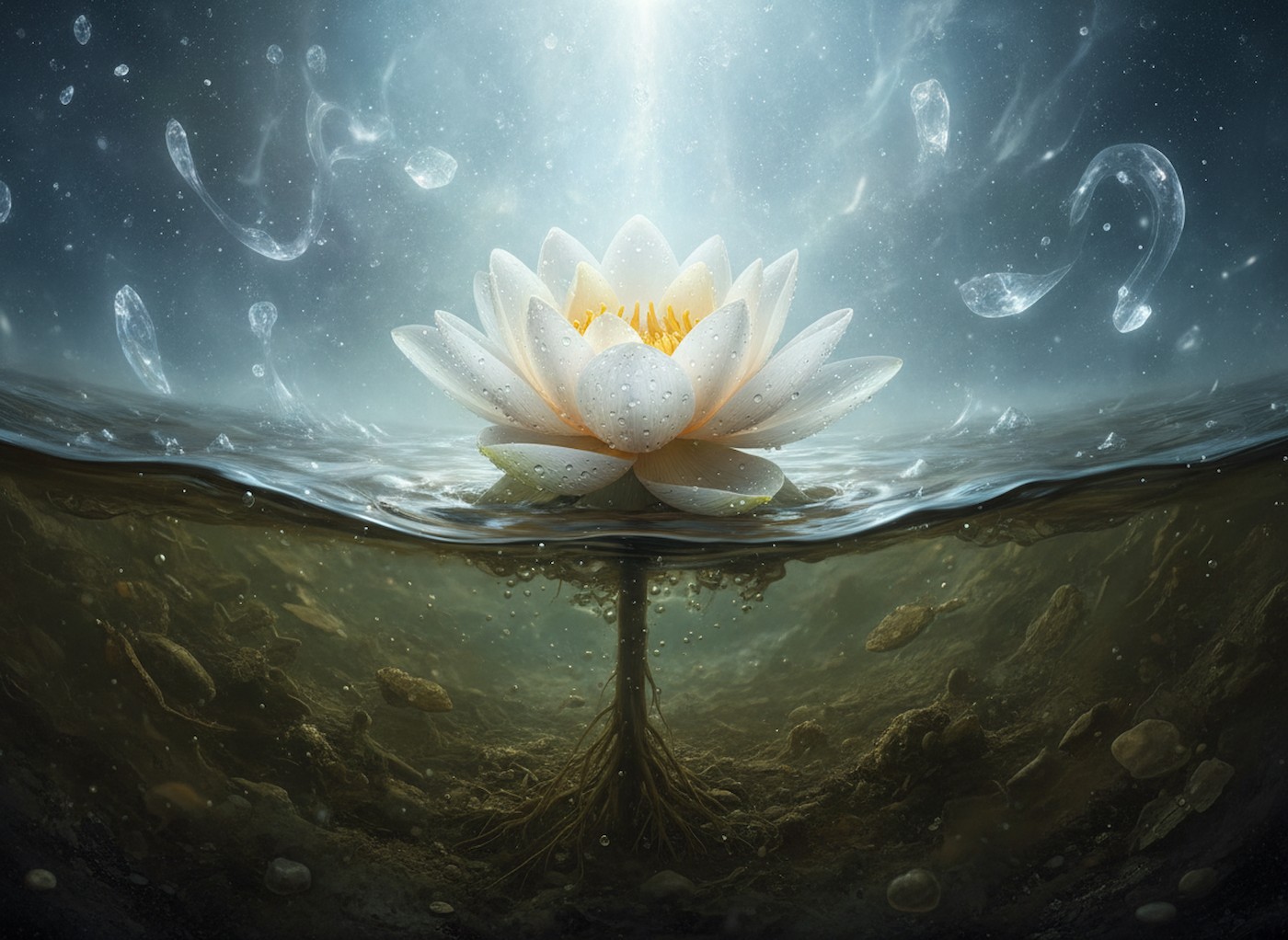

ब्रह्म सत्यं जगन्मिथ्या जीवो ब्रह्मैव नापरः
Brahma satyaṁ jagan mithyā jīvo brahmaiva nāparaḥ
“Brahman alone is real, the world is illusory, and the individual soul is none other than Brahman.”
— Advaita Vedanta Teaching
Have you ever looked at the ripples on a lake and wondered if they’re separate from the water itself? This simple observation holds the key to understanding one of the most profound concepts in Hindu philosophy: the relationship between Brahman, Atman, and non-duality. When you gaze at your reflection in still water, are you seeing two beings or one? This ancient question has captivated spiritual seekers for millennia and continues to transform lives today.
The exploration of Brahman Atman non-duality isn’t merely an intellectual exercise—it’s a journey that can fundamentally shift how you perceive yourself, others, and the entire cosmos. Through this article, you’ll discover how the ultimate reality (Brahman) relates to your innermost self (Atman), and why recognizing their essential unity can liberate you from suffering. Whether you’re taking your first steps into dharmic studies or deepening your spiritual practice, understanding these concepts will illuminate your path toward self-realization.
What Is Brahman? The Eternal Foundation of Existence
When we speak of Brahman (ब्रह्मन्), we’re attempting to describe something that transcends all descriptions. Brahman represents the ultimate reality, the infinite consciousness that pervades everything yet remains untouched by anything. Think of Brahman as the infinite ocean from which all waves arise and into which they eventually dissolve.
The Taittiriya Upanishad offers us a glimpse into Brahman’s nature:
यतो वा इमानि भूतानि जायन्ते येन जातानि जीवन्ति
Yato vā imāni bhūtāni jāyante yena jātāni jīvanti
“That from which all beings are born, by which they live, and into which they merge upon death—that is Brahman.”
— Taittiriya Upanishad 3.1
The Characteristics of Brahman
Brahman possesses three fundamental qualities known as सच्चिदानन्द (Saccidānanda):
- सत् (Sat) – Existence: Brahman is pure being, eternal and unchanging. Unlike material objects that come into existence and perish, Brahman simply IS. It existed before the universe, exists now, and will exist when all material manifestations dissolve.
- चित् (Cit) – Consciousness: Brahman is not unconscious matter but pure awareness itself. Every conscious experience you have—from perceiving a sunset to feeling joy—is possible only because of this infinite consciousness.
- आनन्द (Ānanda) – Bliss: Brahman’s nature is absolute bliss, not the fleeting happiness we experience through sensory pleasures, but an unconditional, unchanging state of completeness.
The Chandogya Upanishad emphasizes Brahman’s all-pervading nature through the famous teaching:
सर्वं खल्विदं ब्रह्म
Sarvaṁ khalvidaṁ brahma
“All this is indeed Brahman.”
— Chandogya Upanishad 3.14.1
This declaration means that everything you perceive—from mountains to molecules, from thoughts to emotions—exists within Brahman. Nothing stands outside this ultimate reality. However, here’s where things become fascinating: while everything exists in Brahman, Brahman remains unaffected by these manifestations, much like space remains unchanged whether empty or filled with objects.
Nirguna and Saguna Brahman
Traditional Hindu philosophy distinguishes between two aspects of understanding Brahman:
Nirguna Brahman (निर्गुण ब्रह्मन्) refers to Brahman without attributes—the formless, indescribable absolute reality beyond all qualities and characteristics. This aspect cannot be worshipped because it transcends all forms, names, and relationships. We can only approach it through negation: “not this, not that” (neti neti).
Saguna Brahman (सगुण ब्रह्मन्) represents Brahman with attributes—the divine manifesting through various forms and qualities for the sake of worship and devotion. When you worship Vishnu, Shiva, Devi, or any other deity, you’re connecting with Saguna Brahman. These forms serve as bridges, helping our finite minds relate to the infinite.
Think of it like water and ice. Ice has a definite form you can hold, while water vapor is formless and all-pervading. Both are H2O, just in different states. Similarly, Nirguna and Saguna Brahman represent the same ultimate reality approached from different perspectives.
Understanding Atman: Your True Self Beyond Body and Mind
While Brahman represents the cosmic reality, Atman (आत्मन्) refers to your innermost self—the eternal consciousness that witnesses all your experiences yet remains distinct from them. The Katha Upanishad beautifully describes Atman:
न जायते म्रियते वा कदाचिन् नायं भूत्वा भविता वा न भूयः
Na jāyate mriyate vā kadācin nāyaṁ bhūtvā bhavitā vā na bhūyaḥ
“The Atman is never born, nor does it die. Having come into being once, it never ceases to be. Unborn, eternal, permanent, and primeval, it is not slain when the body is slain.”
— Katha Upanishad 1.2.18
The Five Sheaths Covering Atman
You might wonder: if Atman is my true self, why don’t I experience it directly? The answer lies in understanding the पञ्च कोश (pañca kośa)—the five sheaths that veil your true nature:
- अन्नमय कोश (Annamaya Kośa) – Physical Sheath: Your body made of food. When you identify with this, you think “I am tall” or “I am sick.”
- प्राणमय कोश (Prāṇamaya Kośa) – Vital Energy Sheath: The life force that animates your body. When identified here, you think “I am energetic” or “I am tired.”
- मनोमय कोश (Manomaya Kośa) – Mental Sheath: Your thoughts and emotions. Identification creates notions like “I am happy” or “I am worried.”
- विज्ञानमय कोश (Vijñānamaya Kośa) – Intellectual Sheath: Your intellect and discrimination. Here you think “I am intelligent” or “I understand.”
- आनन्दमय कोश (Ānandamaya Kośa) – Bliss Sheath: The subtlest covering, experienced in deep sleep. Even here, a trace of ignorance remains.
These sheaths are like layers of clothing covering your true nature. Through spiritual practice and self-inquiry, you gradually remove these coverings to reveal the Atman that was always there, shining in its own light.
The Witness Consciousness
Here’s a practical way to understand Atman: right now, you’re reading these words. Something in you is aware of the reading happening. But what is that awareness itself? Can you observe the observer? This witnessing consciousness—the unchanging awareness that remains constant through all changing experiences—is Atman.
The Brihadaranyaka Upanishad declares:
अयमात्मा ब्रह्म
Ayam ātmā brahma
“This Atman is Brahman.”
— Brihadaranyaka Upanishad 4.4.5
This compact statement reveals the heart of non-dual consciousness: your innermost self (Atman) is not separate from the ultimate reality (Brahman). They are one and the same, like the space inside a pot being identical to the infinite space outside. The pot creates an apparent division, but when the pot breaks, no actual separation ever existed.
The Magnificent Truth of Advaita Vedanta
Advaita Vedanta (अद्वैत वेदान्त) stands as one of the most influential schools of Hindu philosophy, systematically teaching the non-dual nature of reality. The term “Advaita” itself means “not two” (a = not, dvaita = two), pointing directly to the fundamental unity underlying all apparent diversity.
The Great Teachers of Advaita
The philosophical foundation of Advaita Vedanta was brilliantly articulated by Adi Shankaracharya (आदि शङ्कराचार्य) in the 8th century CE. However, the teachings themselves flow from the Upanishads, which form the concluding portions of the Vedas and are classified as श्रुति (śruti)—revealed knowledge.
Shankaracharya’s genius lay in systematically organizing scattered Upanishadic teachings into a coherent philosophical framework. His commentaries on the Brahma Sutras, principal Upanishads, and the Bhagavad Gita established Advaita as a complete system of knowledge and practice.
The Guru-Shishya Parampara (गुरु-शिष्य परम्परा) or teacher-student lineage has preserved these teachings through centuries. From Shankaracharya to contemporary masters, this unbroken chain ensures the authentic transmission of dharmic concepts from one generation to the next.
The Three States of Consciousness
Advaita Vedanta uses your own daily experience to reveal profound truths about ultimate reality. Consider the three states you cycle through every day:
जाग्रत (Jāgrat) – Waking State: You perceive the external world through your senses. Objects appear solid and separate. You interact with other people and navigate physical reality. Most people assume this state represents the “real” world.
स्वप्न (Svapna) – Dream State: You create an entire world in your mind. Mountains, people, conversations—all arise from your consciousness. While dreaming, this world feels completely real. You don’t realize it’s your own mental creation until you wake up.
सुषुप्ति (Suṣupti) – Deep Sleep: Both waking and dreaming worlds dissolve. Yet you don’t cease to exist. Upon waking, you report “I slept peacefully” or “I knew nothing.” Who is this “I” that existed without objects, thoughts, or dreams?
The Mandukya Upanishad explores these states and reveals a fourth state—तुरीय (Turīya)—which is not a state at all but the constant witnessing awareness present in all three states. This Turiya is your true nature, the Atman-Brahman reality.
The Rope and Snake Analogy
Advaita teachers often use the example of mistaking a rope for a snake. Imagine walking at dusk and seeing a curved object on the path. Your mind immediately projects “snake!” Fear arises, your heart races, and you jump back. But upon closer examination with a flashlight, you realize it was always just a rope. The snake never existed except as a misperception.
This illustrates how we superimpose false characteristics onto reality. The rope represents Brahman—the unchanging substrate. The imagined snake represents the world of names and forms we perceive. Fear and reactions represent the suffering created by ignorance. Knowledge (the flashlight) reveals that only the rope existed all along.
Maya: The Cosmic Illusion That Appears So Real
The concept of माया (Māyā) often confuses beginners because it seems to suggest the world is “fake” or “unreal.” However, the Maya illusion is far more nuanced than simple negation of existence.
What Maya Really Means
Maya represents the divine creative power that makes the one appear as many, the infinite appear as finite, and the eternal appear as temporal. It’s not that the world doesn’t exist—it exists, but not in the way we ordinarily perceive it.
Think of how a movie projector creates moving images on a blank screen. The images appear, change, and tell a compelling story. They’re not “non-existent”—you genuinely see them. Yet they’re also not independent realities separate from the screen and light. Similarly, the world truly appears but doesn’t exist independently of Brahman.
The Bhagavad Gita explains Maya’s power:
दैवी ह्येषा गुणमयी मम माया दुरत्यया
Daivī hyeṣā guṇamayī mama māyā duratyayā
“This divine Maya of Mine, consisting of the three gunas, is extremely difficult to overcome.”
— Bhagavad Gita 7.14
The Three Gunas: Maya’s Building Blocks
Maya operates through three fundamental qualities called गुण (guṇa):
सत्त्व (Sattva) – Purity, harmony, knowledge, and light. When sattva predominates in your mind, you experience clarity, peace, and understanding. Sunrise, cleanliness, and wisdom represent sattvic qualities.
रजस् (Rajas) – Activity, passion, restlessness, and desire. Rajas drives action, ambition, and change. Fire, movement, and intense emotions embody rajasic energy.
तमस् (Tamas) – Inertia, darkness, ignorance, and dullness. Tamas manifests as laziness, confusion, and resistance to change. Night, sleep, and heaviness express tamasic qualities.
Everything in creation combines these three gunas in varying proportions. Your mood shifts, your body’s condition, the food you eat, even the time of day—all reflect different combinations of sattva, rajas, and tamas.
Understanding the gunas helps you navigate Maya more skillfully. Spiritual practices increase sattva, which naturally leads toward clarity and self-realization. Eventually, you transcend even sattva to realize the gunatita state—beyond all qualities—which is Brahman itself.
Avidya: Ignorance as the Root Problem
Within Maya operates अविद्या (Avidyā)—fundamental ignorance of your true nature. This isn’t mere lack of information; it’s a positive misconception that actively distorts your perception of reality.
Avidya makes you think:
- “I am this body” instead of “I am the eternal witness”
- “I am incomplete” instead of “I am the fullness of Brahman”
- “I am separate from others” instead of “All is one consciousness”
- “Happiness comes from external objects” instead of “Bliss is my very nature”
The Yoga Sutras of Patanjali identify avidya as the root of all other afflictions. Once you misidentify yourself as a limited body-mind complex, desire and aversion naturally follow. These create karma, which perpetuates the cycle of birth and death (samsara).
Knowledge alone dissolves avidya. Not intellectual knowledge, but direct realization of your identity with Brahman. This is why the Upanishads emphasize आत्म ज्ञान (ātma jñāna)—self-knowledge—as the supreme means of liberation.
The Four Mahavakyas: Great Statements of Identity
The Upanishads contain four महावाक्य (Mahāvākya)—great statements—that directly point to the truth of Brahman Atman non-duality. Each comes from one of the four Vedas and serves as a contemplative focus for realizing your true nature:
Prajnanam Brahma (प्रज्ञानं ब्रह्म)
“Consciousness is Brahman.”
— Aitareya Upanishad (Rigveda)
This statement identifies the fundamental awareness present in all experience as none other than Brahman. Your capacity to know, perceive, and be aware isn’t a personal possession—it’s Brahman itself shining through the apparent individual.
Tat Tvam Asi (तत् त्वम् असि)
“You are That.”
— Chandogya Upanishad 6.8.7 (Samaveda)
Perhaps the most famous Mahavakya, this teaching came from the sage Uddalaka to his son Shvetaketu. After demonstrating through various examples how the subtle essence pervades all things, Uddalaka concludes by pointing directly: that supreme essence which you’ve been seeking externally—you yourself are That.
Ayam Atma Brahma (अयम् आत्मा ब्रह्म)
“This Self is Brahman.”
— Mandukya Upanishad (Atharvaveda)
This declaration removes any doubt about the identity between your innermost self and the cosmic reality. Not “similar to” or “a part of” but IS. Complete, non-dual identity.
Aham Brahmasmi (अहम् ब्रह्मास्मि)
“I am Brahman.”
— Brihadaranyaka Upanishad 1.4.10 (Yajurveda)
The most direct first-person affirmation. Not the ego-I, not the body-mind-I, but the true I—pure consciousness—declaring its identity with the absolute.
These Mahavakyas aren’t meant for mere repetition. Traditional teachers instruct students to contemplate them deeply through श्रवण (hearing), मनन (reflection), and निदिध्यासन (profound meditation). Through this threefold process, intellectual understanding ripens into direct realization.
The Path to Self-Realization: From Knowledge to Experience
Understanding spiritual oneness intellectually represents an important first step, but self-realization requires transformation at the deepest level of your being. Advaita Vedanta outlines a clear path for this journey.
Prerequisites: The Four Qualifications
Before undertaking serious study of Vedanta, traditional teachers identify four essential qualifications called साधन चतुष्टय (sādhana catuṣṭaya):
विवेक (Viveka) – Discrimination: The ability to distinguish between the eternal and temporal, real and unreal, self and non-self. You develop this by observing how all objects change while the witnessing awareness remains constant.
वैराग्य (Vairāgya) – Dispassion: Not rejecting the world, but freedom from compulsive attachment to sensory pleasures and worldly achievements. You recognize that no external object can provide lasting fulfillment.
षट्सम्पत्ति (Ṣaṭsampatti) – Six Virtues: These include mental calmness (śama), sense control (dama), withdrawal from distractions (uparati), forbearance (titikṣā), faith (śraddhā), and concentration (samādhāna).
मुमुक्षुत्व (Mumukṣutva) – Intense desire for liberation: An earnest longing to know the truth of your being, stronger than any other desire. This isn’t mere curiosity but a burning question: “Who am I really?”
The Threefold Practice
Once you possess these qualifications, you engage in systematic study and practice:
श्रवण (Śravaṇa) – Listening: Receive the teachings from a qualified teacher who belongs to an authentic parampara. The Upanishads emphasize the necessity of a guru because intellectual study alone cannot transmit the direct understanding required.
The Mundaka Upanishad states:
तद्विज्ञानार्थं स गुरुमेवाभिगच्छेत्
Tadvijñānārthaṁ sa gurumevābhigacchet
“To know That, one must approach a guru.”
— Mundaka Upanishad 1.2.12
मनन (Manana) – Reflection: Contemplate the teachings deeply, removing doubts and resolving apparent contradictions. You examine your direct experience in light of the teachings. Does the teaching match reality? Where do questions or resistances arise?
निदिध्यासन (Nididhyāsana) – Profound Meditation: Continuously abide in the awareness of your true nature. This isn’t visualization or concentration on an object, but resting as the witness consciousness itself.
Jnana Yoga: The Path of Knowledge
ज्ञान योग (Jñāna Yoga) represents the primary path taught in Advaita Vedanta. However, “knowledge” here means direct realization, not mere information. It’s the difference between reading about honey and tasting it yourself.
The practice of self-inquiry (आत्म विचार – ātma vicāra) stands at the heart of Jnana Yoga. You persistently ask “Who am I?” not expecting a verbal answer but investigating the source of the “I-thought” itself.
When you say “I am happy” or “I am sad,” who is this I that witnesses both happiness and sadness? When you say “my body” or “my mind,” who possesses them? This investigation leads you beyond all objects of awareness to the pure subject—the Atman.
Integration with Other Paths
While Advaita emphasizes knowledge, it doesn’t reject other approaches. The Bhagavad Gita presents a comprehensive vision integrating multiple paths:
भक्ति योग (Bhakti Yoga) – Devotion: Surrendering to the divine with love and faith. Even from the non-dual perspective, devotion serves a crucial role in purifying the mind and developing single-pointed focus. The bhakta eventually realizes that the beloved deity and their own self are one.
कर्म योग (Karma Yoga) – Selfless Action: Performing duties without attachment to results. Krishna teaches this extensively in the Gita, showing how action itself becomes a spiritual practice when done with the right understanding.
The Bhagavad Gita 18.55 beautifully shows devotion leading to knowledge:
भक्त्या मामभिजानाति यावान्यश्चास्मि तत्त्वतः
Bhaktyā māmabhijānāti yāvānyaścāsmi tattvataḥ
“Through devotion one truly knows Me, what and who I am in essence.”
Different paths suit different temperaments, but all ultimately lead to the same realization of non-dual consciousness.
Living the Truth: Non-Duality in Daily Life
You might wonder: if everything is one, how should I live? Does realization of non-duality make worldly life meaningless? Actually, the opposite proves true. Understanding your essential nature transforms how you engage with every aspect of life.
The Jivanmukta: Living Liberation
A जीवन्मुक्त (jīvanmukta)—one who is liberated while living—continues to function in the world but without the binding sense of doership and ownership. Their body-mind continues its activities, but they know themselves as the eternal witness, untouched by these activities.
The jivanmukta sees the same Brahman in all beings. This isn’t a belief they hold but their direct experience. When you truly know yourself as the infinite consciousness, how can you genuinely hate or fear what is ultimately your own self in another form?
The Bhagavad Gita describes such a person:
ब्रह्मभूतः प्रसन्नात्मा न शोचति न काङ्क्षति
Brahmabhūtaḥ prasannātmā na śocati na kāṅkṣati
“Established in Brahman, with a serene mind, one neither grieves nor desires.”
— Bhagavad Gita 18.54
This doesn’t mean becoming emotionally cold or withdrawn. Rather, you engage fully with life while remaining rooted in the knowledge of your true nature. Joy and sorrow, success and failure—all are witnessed without losing your center.
Ethical Living from Non-Dual Awareness
Some people mistakenly think non-duality negates ethics: “If all is one, why not do whatever I want?” This misunderstands both the teaching and its implications.
True realization naturally expresses as compassion, kindness, and dharmic conduct. When you know others as yourself, harming them would be harming yourself. The sage Yajnavalkya taught his wife Maitreyi:
आत्मनस्तु कामाय सर्वं प्रियं भवति
Ātmanastu kāmāya sarvaṁ priyaṁ bhavati
“Everything is dear for the sake of the Self.”
— Brihadaranyaka Upanishad 2.4.5
We love our family, possessions, and achievements not for their own sake but because we see them as extensions of ourselves. When this understanding expands to encompass all beings, universal love naturally arises.
The dharmic life—following dharma (धर्म), the cosmic order and righteous living—becomes effortless. You no longer follow rules from fear or obligation but act in harmony with the nature of reality itself.
Practical Application in Modern Life
How does this ancient wisdom apply to your contemporary challenges? Consider these scenarios:
In Relationships: Instead of constantly seeking validation from others, you recognize your completeness. This allows you to give freely without expectation and receive graciously without attachment. Conflicts diminish when you see the same consciousness looking through different eyes.
In Work: Your career becomes an expression of your unique skills rather than a desperate attempt to prove your worth. Success and failure don’t define you because you know yourself as something beyond all achievements.
In Suffering: When difficulty arises—illness, loss, disappointment—you have an anchor. The events happen to the body-mind, but you remain as the unchanging witness. This doesn’t eliminate pain but provides perspective that prevents despair.
In Daily Activities: Even mundane tasks become opportunities for mindfulness. Washing dishes, driving, or eating can be done with full awareness, recognizing the consciousness that pervades all activities.
Common Questions and Misconceptions
As you explore these profound teachings, certain questions naturally arise. Let’s address some frequent concerns:
“If I’m already Brahman, why practice?”
This represents a common confusion. Yes, you are already Brahman—you’ve never been anything else. But as long as ignorance persists, you don’t experience this truth. It’s like being a millionaire with amnesia, begging on the streets. You are wealthy, but without remembering this fact, you suffer poverty.
Practice doesn’t create your divine nature; it removes the veils obscuring it. The sun doesn’t need to become bright—it is bright—but clouds may temporarily hide its radiance.
“Doesn’t non-duality deny individual existence?”
The teaching doesn’t negate your individuality at the relative level. You continue to have a unique body, personality, and role in the world. What it denies is the ultimate reality of separation. Just as waves are individually distinct yet all water, you are uniquely expressed while essentially one with all.
Your individuality serves a purpose in the cosmic dance. The key is not identifying exclusively with it.
“How can I reconcile worship of deities with non-duality?”
This question reveals a false dichotomy. Saguna Brahman—the divine with form—provides a accessible means of relating to the formless absolute. When you worship Shiva, Krishna, or Devi with devotion, you’re engaging with Brahman through a particular aspect that resonates with your heart.
Advanced practitioners may transcend form, but this doesn’t invalidate devotional practice. In fact, many great Advaitins were also devoted bhaktas. Shankaracharya himself composed beautiful devotional hymns alongside his philosophical treatises.
“Does realizing non-duality mean I should renounce everything?”
Not necessarily. While some seekers choose monastic renunciation (sannyasa), others remain as householders. The Bhagavad Gita teaches the path of कर्म योग—remaining active in the world while internally renouncing attachment to results.
True renunciation happens in the mind, not merely in external circumstances. You can own possessions without being possessed by them, fulfill duties without being bound by them.
The Scientific Perspective: Modern Echoes of Ancient Wisdom
Interestingly, contemporary physics and consciousness studies increasingly echo insights from Advaita Vedanta, though from different methodologies:
Quantum Physics: The observer effect in quantum mechanics shows that observation affects reality at the subatomic level. While not identical to Vedantic teachings, this suggests consciousness plays a more fundamental role than classical physics assumed.
Neuroscience: Studies of meditation and consciousness reveal that the sense of separate self arises from brain processes, not from an actual isolated entity. This aligns with the Vedantic teaching that the ego is a construct, not ultimate reality.
Consciousness Studies: The “hard problem of consciousness”—explaining how subjective experience arises from physical matter—remains unsolved in materialist frameworks. Vedanta offers an alternative: consciousness is primary, not derivative.
These parallels don’t “prove” Vedanta, nor do they need to. The teachings stand on their own authority derived from realized sages and verified through direct experience. However, they do show that ancient dharmic concepts remain relevant and thought-provoking even in our scientific age.
The Journey Continues: Next Steps on Your Path
Understanding Brahman Atman non-duality intellectually marks just the beginning. The real journey involves transforming this understanding into living wisdom. Here are practical steps to deepen your exploration:
Study Foundational Texts
Begin with accessible translations and commentaries:
- Bhagavad Gita: Start here for an overview of Hindu philosophy in the context of practical life
- Upanishads: Focus on the principal Upanishads like Isha, Kena, Katha, and Mandukya
- Vivekachudamani (The Crest Jewel of Discrimination) by Shankaracharya: A clear, systematic presentation of Advaita
Read slowly, contemplating each verse rather than rushing to finish. Quality of understanding matters far more than quantity of reading.
Find Authentic Guidance
While books provide valuable knowledge, a qualified teacher offers personalized instruction suited to your unique questions and obstacles. Seek teachers who:
- Belong to recognized lineages (parampara)
- Demonstrate the qualities they teach
- Balance philosophical rigor with compassionate understanding
- Respect traditional teachings while making them accessible
Establish Daily Practice
Create a routine incorporating:
- Meditation: Even 15-20 minutes daily of silent sitting, watching thoughts without engagement
- Self-Inquiry: Periodically ask “Who am I?” and trace the sense of “I” to its source
- Study: Read sacred texts or listen to teachings from authentic sources
- Contemplation: Reflect on one teaching at a time, examining your experience in its light
Cultivate Supportive Lifestyle
Your daily choices either support or hinder your spiritual growth:
- Sattvic Diet: Eat fresh, pure foods that promote clarity
- Ethical Conduct: Practice truthfulness, non-harm, and integrity
- Satsang: Spend time with others on the spiritual path
- Service: Engage in selfless service, seeing divinity in all beings
Be Patient with Yourself
Self-realization rarely happens overnight. Even after intellectual understanding dawns, deeply rooted habits of identification with body and mind persist. This is natural. The Upanishads themselves acknowledge that this knowledge is subtle and difficult to grasp.
Progress comes through persistent, gentle effort. Some days you’ll feel clarity and peace; other days, confusion and doubt may arise. All of this is part of the journey. Continue steadily, trusting the process.
The Sacred Narratives: Wisdom Through Stories
Traditional teaching often employs stories that convey profound truths in accessible ways. Here’s one such account from the Chandogya Upanishad:
The Teaching of Uddalaka to Shvetaketu
A young man named Shvetaketu returned home after twelve years of Vedic study, proud of his accomplishments. His father, the sage Uddalaka, asked him:
“My dear son, did you ask your teacher about that instruction by which what is unheard becomes heard, what is unthought becomes thought, and what is unknown becomes known?”
Shvetaketu admitted he had not learned such a teaching. Uddalaka then gave him a series of lessons demonstrating the fundamental unity underlying all diversity:
He asked Shvetaketu to place salt in water overnight. The next morning, the salt had dissolved completely. “Can you find the salt?” he asked. Shvetaketu couldn’t see it anywhere.
“Taste the water from the top,” Uddalaka instructed. “How is it?” “Salty,” replied Shvetaketu. “Taste from the middle… from the bottom.” Each time, Shvetaketu found the water salty.
Uddalaka explained: “You don’t see the salt, yet it pervades the water entirely. Similarly, the finest essence—which you cannot perceive with your senses—pervades this entire universe. That is Reality. That is the Self. Tat tvam asi, Shvetaketu—You are That, Shvetaketu!”
Through this simple demonstration, Uddalaka revealed the truth of spiritual oneness. The individual self (like the salt) dissolves into and pervades the universal consciousness (like the water). You are not separate from the ultimate reality—you are it, even when you can’t “see” it with your physical senses.
Breaking Free: Liberation in This Lifetime
The goal of understanding Brahman Atman non-duality isn’t mere philosophical knowledge but मोक्ष (mokṣa)—liberation from suffering and the cycle of birth and death.
Understanding Moksha
Moksha doesn’t mean going somewhere or becoming something you’re not. Rather, it’s the removal of ignorance that creates the illusion of bondage. You’re already free; you just don’t know it yet.
Think of it like waking from a nightmare. In the dream, you might be chased by monsters, facing genuine terror. Upon waking, you realize: there were no monsters, no danger—it was all a mental projection. Similarly, moksha is waking up from the dream of separation and limitation.
The Katha Upanishad describes the liberated state:
यदा सर्वे प्रमुच्यन्ते कामा येऽस्य हृदि श्रिताः
Yadā sarve pramucyante kāmā ye’sya hṛdi śritāḥ
“When all desires that dwell in the heart are cast away, then the mortal becomes immortal and attains Brahman here.”
— Katha Upanishad 2.3.14
This “casting away of desires” doesn’t mean forced suppression but natural falling away. When you recognize yourself as the fullness of Brahman, what remains to desire? Desires arise from a sense of lack, incompleteness. In the recognition of your complete nature, compulsive desires simply dissolve.
The End of Karma
Traditional Hindu philosophy teaches कर्म (karma)—the law of action and reaction that binds you to the cycle of rebirth. Every action performed with attachment creates karmic impressions that demand future experiences to exhaust them.
However, the jnani (wise one) who knows the truth continues to act but creates no new karma. Actions performed without the sense of “I am the doer” don’t bind. They’re like lines drawn on water—appearing momentarily but leaving no lasting trace.
The Bhagavad Gita explains this beautifully:
ब्रह्मण्याधाय कर्माणि सङ्गं त्यक्त्वा करोति यः
Brahmaṇyādhāya karmāṇi saṅgaṁ tyaktvā karoti yaḥ
“One who performs actions, offering them to Brahman and abandoning attachment, is not tainted by sin, just as a lotus leaf is not wetted by water.”
— Bhagavad Gita 5.10
This isn’t license for careless action. Rather, it describes the natural state of one established in self-knowledge. Their actions align spontaneously with dharma because they flow from wisdom rather than ego.
Key Sanskrit Terms: Your Glossary for Deeper Understanding
To support your continued study, here are essential terms with their meanings:
- ब्रह्मन् (Brahman): The ultimate, infinite reality; pure existence-consciousness-bliss
- आत्मन् (Ātman): The innermost self; the eternal witness consciousness
- अद्वैत (Advaita): Non-duality; the teaching that ultimate reality is one without a second
- माया (Māyā): The divine creative power that makes the one appear as many; cosmic illusion
- अविद्या (Avidyā): Fundamental ignorance of one’s true nature; the root cause of suffering
- सच्चिदानन्द (Saccidānanda): Existence-consciousness-bliss; the three characteristics of Brahman
- जीव (Jīva): The individual soul; Atman identified with body and mind due to ignorance
- मोक्ष (Mokṣa): Liberation; freedom from the cycle of birth and death
- ज्ञान (Jñāna): Knowledge; specifically, direct realization of one’s identity with Brahman
- गुरु (Guru): Spiritual teacher; one who removes darkness (ignorance) and brings light (knowledge)
- उपनिषद् (Upaniṣad): The philosophical portions of the Vedas; literally “sitting near” (the teacher)
- वेदान्त (Vedānta): The culmination of the Vedas; refers both to Upanishads and philosophical systems based on them
- साधना (Sādhana): Spiritual practice; the means employed for self-realization
- समाधि (Samādhi): Deep meditative absorption; union with the object of meditation
- संसार (Saṁsāra): The cycle of birth, death, and rebirth; the phenomenal world
Conclusion: Your Eternal Nature Awaits Recognition
As we conclude this exploration of Brahman Atman non-duality, remember that these aren’t exotic ideas from a distant culture but universal truths about the nature of consciousness and reality. Every human being, regardless of background, shares the same essential nature—pure, infinite awareness temporarily appearing as limited individuals.
The Maya illusion that creates apparent separation is powerful, but it’s not ultimate. Knowledge has the power to dissolve it, just as light dispels darkness. You don’t need to create your divine nature or earn it through good deeds. You simply need to recognize what you’ve always been.
This recognition—self-realization—transforms everything. Not by changing external circumstances, but by revealing their true nature. The world continues, relationships continue, challenges continue. Yet you stand as the eternal witness, untouched and complete.
The path of Advaita Vedanta offers both profound philosophy and practical methods for this recognition. Through study, contemplation, and meditation under proper guidance, the truth that seemed merely intellectual becomes lived reality. The knowledge “I am Brahman” stops being a concept you think about and becomes the self-evident truth you ARE.
Your journey has just begun. Each step you take in understanding these teachings brings you closer to your own true nature. The sages who realized this truth thousands of years ago left us their wisdom in the Upanishads, the Bhagavad Gita, and other sacred texts. Their realization is not different from the realization available to you right now.
May this exploration serve as a lamp illuminating your path. May you discover the spiritual oneness that connects all beings. May the recognition of ultimate reality bring you lasting peace and freedom.
ॐ असतो मा सद्गमय तमसो मा ज्योतिर्गमय मृत्योर्मा अमृतं गमय ॐ शान्तिः शान्तिः शान्तिः
Om asato mā sadgamaya Tamaso mā jyotirgamaya Mṛtyormā amṛtaṁ gamaya Om śāntiḥ śāntiḥ śāntiḥ
“Lead me from the unreal to the Real, Lead me from darkness to Light, Lead me from death to Immortality. Om Peace, Peace, Peace.”
— Brihadaranyaka Upanishad 1.3.28

Comments are closed.